Preparation
Good preparation doesn't just give you the right arguments for the negotiation. It also makes you more secure in the conversation and boosts your confidence, so you can get the best possible outcome for yourself. To set yourself up tactically for your next salary negotiation, here's what to do:
🔑 5 keys to success for your next salary negotiation.
1. Build the foundation. Above-average performance isn't the only lever for a higher salary, but it's the most common and the most powerful one. Find out what's expected in your role, beat your targets, and make sure your impact is visible.
2. Collect your wins. Positive feedback, successful projects, targets hit: keep a running record of it all, on paper or digitally. It doesn't just help in the negotiation, it also makes your own successes visible and builds your confidence.
3. Know your market value. Use salary sites like Glassdoor, Techpays EU, and others to get a feel for typical pay in your role and industry. Talk openly with colleagues and friends, check job postings (they often list salary ranges), or ask recruiters.
4. Set your target salary. Based on the market data, now decide on your target salary and your "anchor." The anchor sits above your target so you have room to move. Name an exact number, not a range. Example: you currently earn €70,000 and your target is €80,000, so you set your anchor at, say, €87,500.
5. Pick the right moment. Your arguments and target are set, now timing is everything. A good occasion: a finished project, a client you won, a funding round. Ideally you've just delivered measurable value and the company is in a financial position to raise your pay. If there's a fixed process for salary reviews, get in 2 to 3 months BEFORE it kicks off.
#SalaryNegotiation #Raise #Career #Salary
Build the foundation for a raiseAbove-average performance certainly isn't the only path to a raise, but it's by far the best and most common argument in the negotiation. So: find out what's expected in your role, and exceed it. Get involved in important projects and try to create visible value for your company.
Keep a running record of your "wins"Positive feedback from colleagues and managers, successful projects, targets hit – keep track of all of it as you go, for example in a notebook or digitally. And it's not only useful for the negotiation: it also helps you picture your own successes and build your confidence.
Know your market valueUse salary sites (e.g. Glassdoor, Techpays.eu, Destatis) to get a feel for typical pay in your role and industry. You can also talk openly with colleagues and friends, look at job postings (they often include salary ranges), or ask recruiters.
Decide on your target salaryBased on the market data, you can now set your target salary and your "anchor." The anchor should sit above your target so you have some room to move in the negotiation. Both numbers should be exact – avoid naming salary ranges. To put it concretely: you currently earn €70,000 and your target is €80,000, so you might set your anchor at, say, €84,500.
Find the right moment for the negotiationYou've lined up the perfect arguments and you know your target. Now it's important to choose the right moment for the conversation. A good occasion for a salary talk might be a finished project, a new client you won, or a funding round. Ideally you've just delivered measurable value and the company is in a financial position to raise your pay. If your company has a structured process for salary reviews, you should have the conversation 2–3 months before that process begins.
Tools like Glassdoor or Techpays.eu help you figure out the realistic market value of your role.
The moment of truth
Ask for a dedicated salary meetingSalary negotiations shouldn't happen in passing, or after the second glass of prosecco at the holiday party. Ask your manager for a dedicated meeting for the salary conversation. For tips on timing, see point 5 above. Bonus tip: finish your preparation before you ask for the meeting. That way you'll feel more confident and can handle any spontaneous questions with ease.
Start the conversation confident and positiveIt sounds a little silly, but right before the meeting, the right posture helps give your confidence a final boost. Stretch a few minutes beforehand, then sit up straight, breathe deeply, and speak slowly. Open on a positive note, then get to the point fairly quickly. What matters is that you lead the negotiation and feel at ease.
Make your case with your value to the companyYou've exceeded expectations in your role, contributed to the most important projects, and documented your personal wins. Now it's time to bring out your best arguments. Wherever you can, lean on measurable, objective results, e.g. „I automated process XY and saved 10 hours a week“ or „Over the last 4 months I've hit 110 % of my revenue targets“.
State your salary expectation with confidenceOnce you've underlined your value to the company, it's time to drop your salary anchor. Here it's not just what you say that matters – the exact number you decided on beforehand – but also how you say it. Look the other person in the eye, speak calmly and slowly, and pause after you've stated your expectation. That pause is especially important. You've made your case and named your number; now it's up to your manager to respond.
Stay with it and don't take it personallyThere are many ways your manager might react to your request. One thing you almost certainly won't hear is an unconditional yes. Expect at least 2–3 rounds of back-and-forth – counteroffers – before you land on a number. It can be uncomfortable for both sides, and you might even catch yourself feeling like you're being difficult. What matters at this stage: stay friendly, matter-of-fact, and firm. See the conversation as a joint search for a solution, not a battle against an opponent. We'll show you how to handle pushback in the next section.
See the conversation as a joint search for a solution – not a battle against an opponent.
Pause after you've stated your salary expectation. Now it's up to your manager to respond.
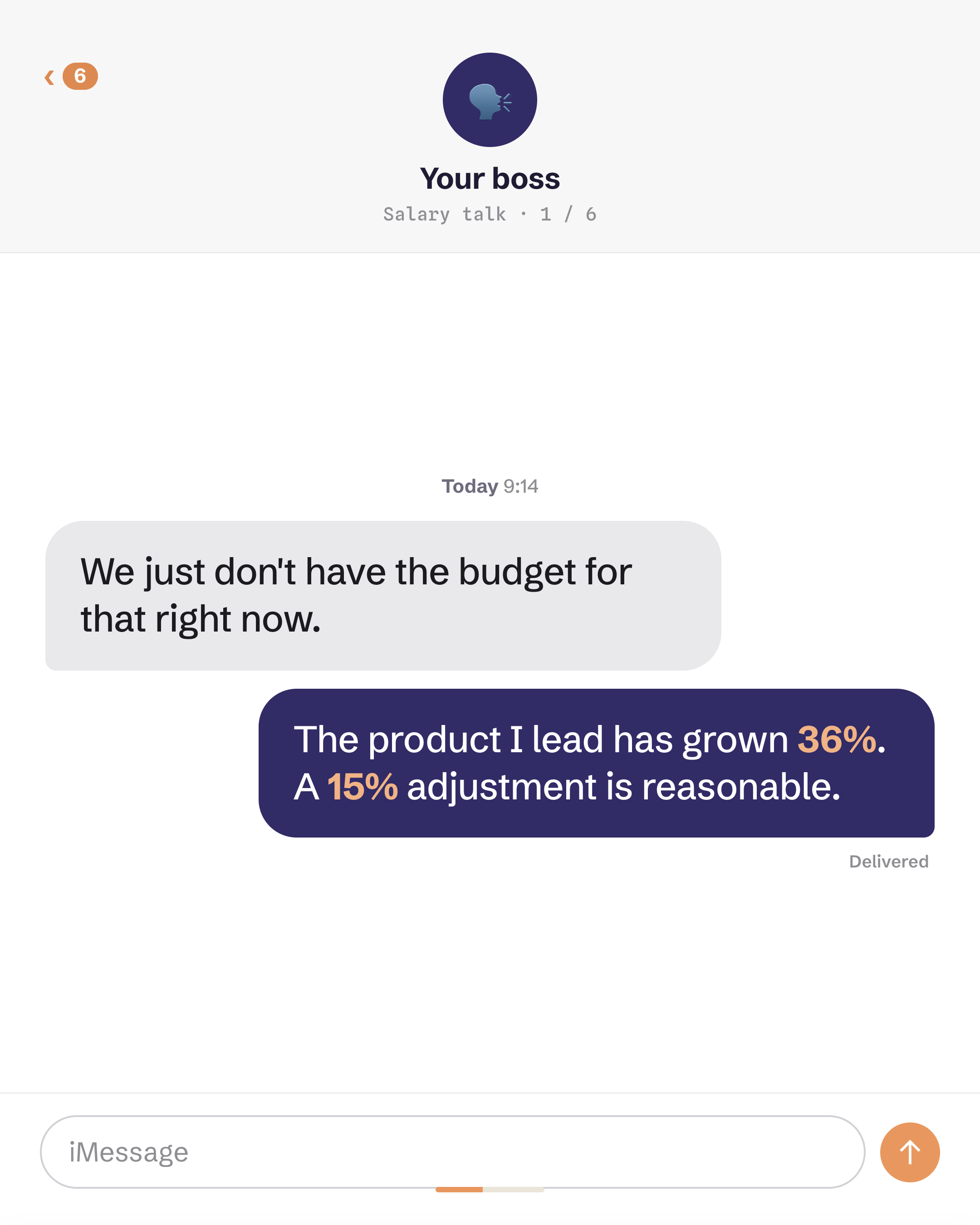
We don't have the budget for a raise 🙅
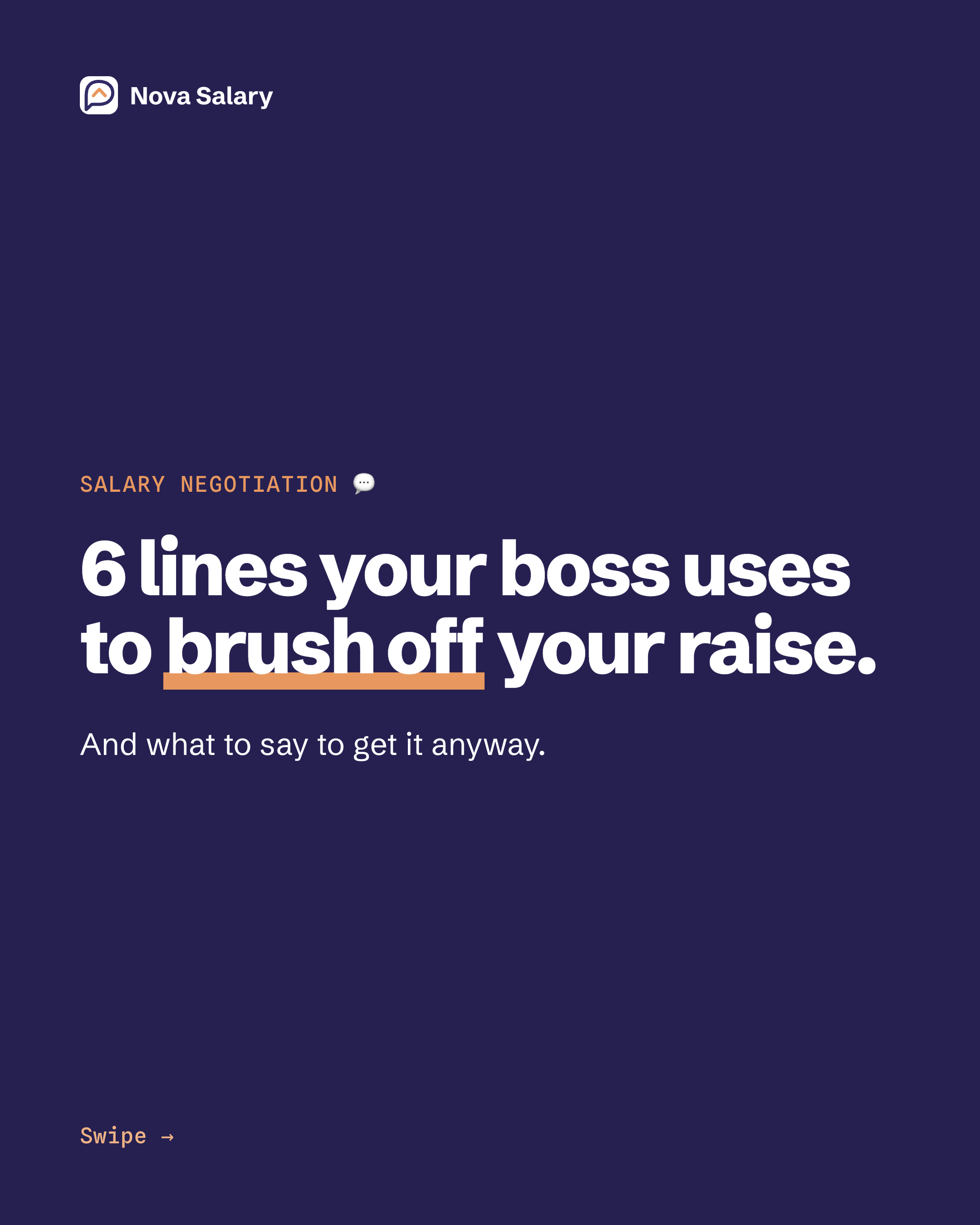
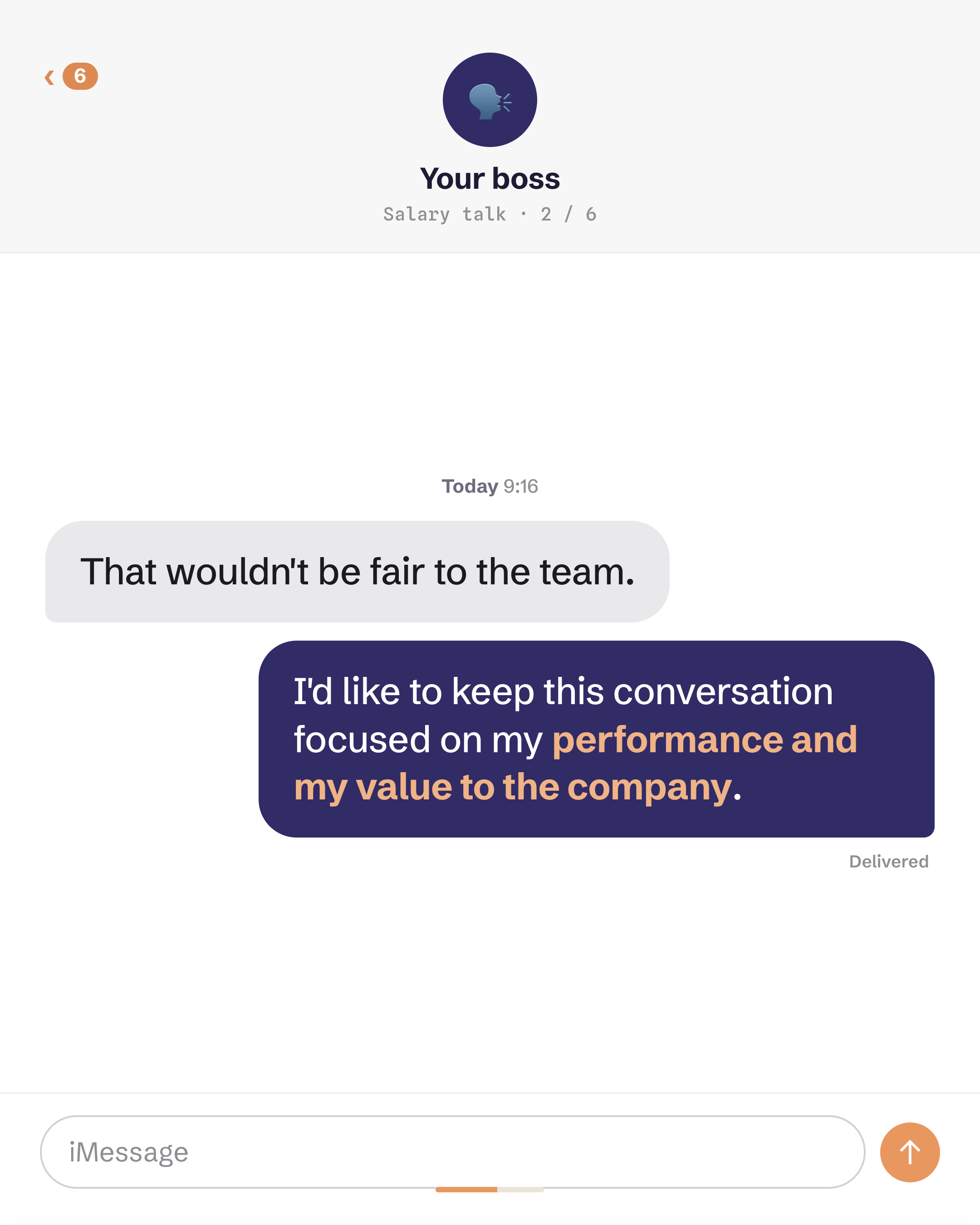
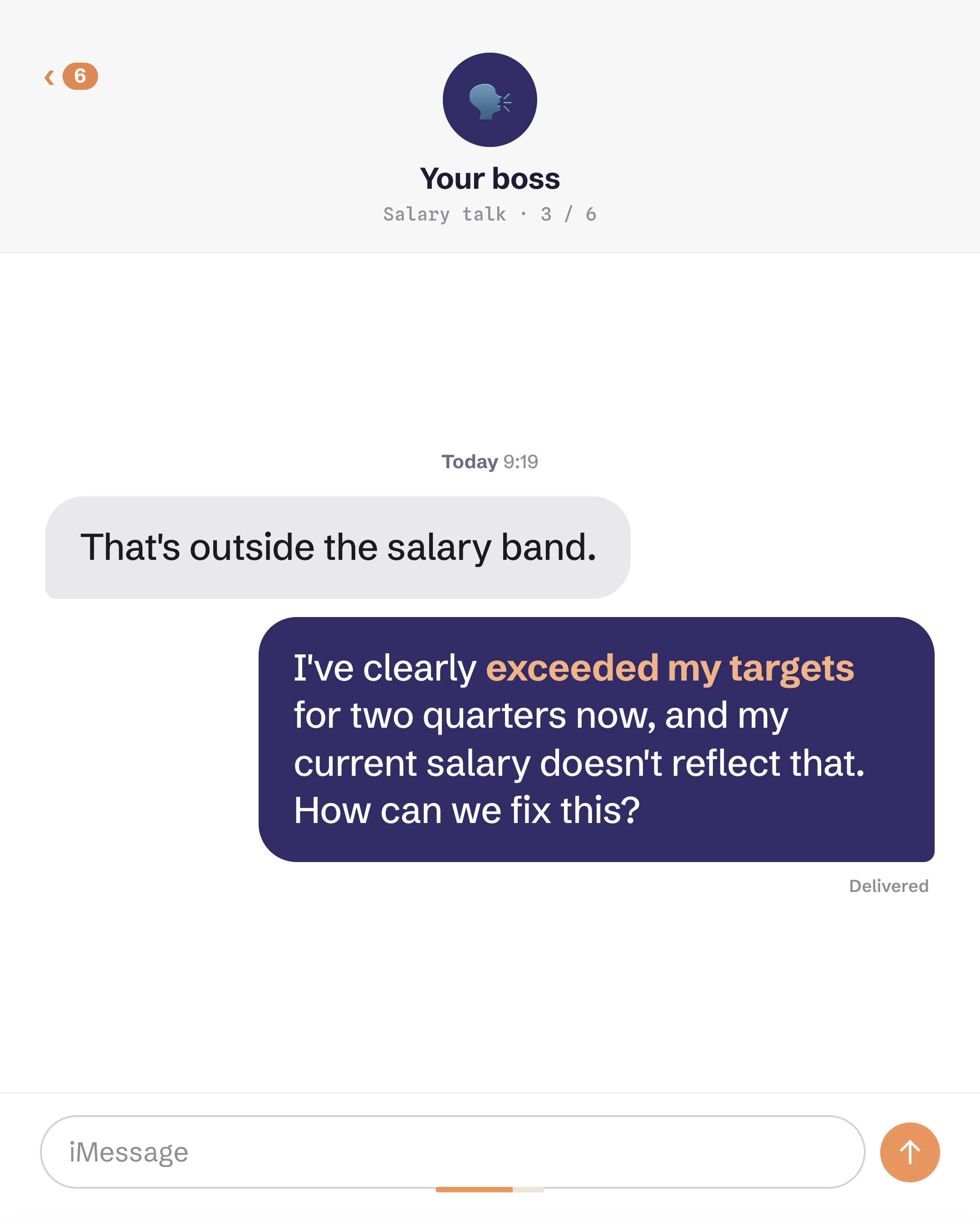
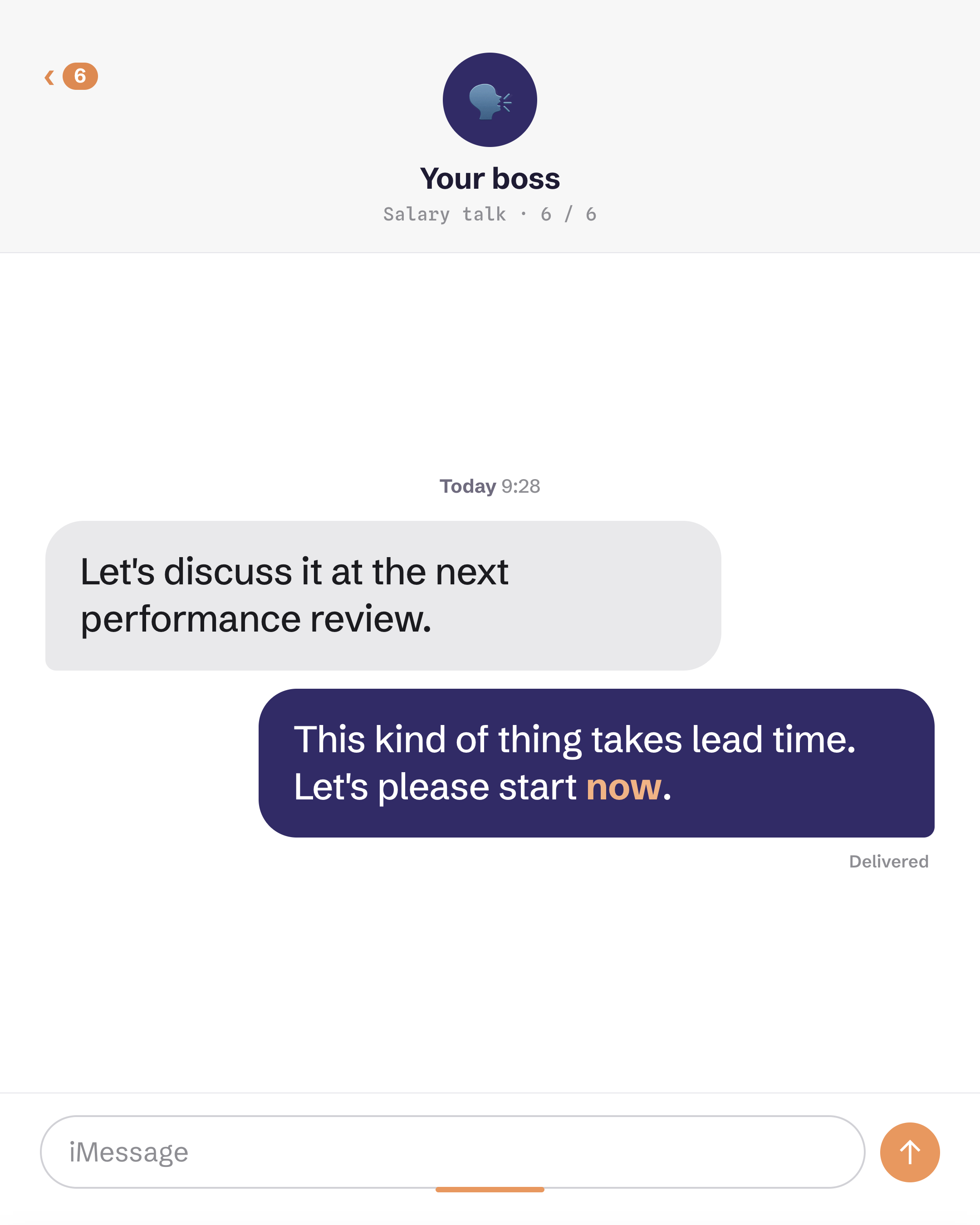
You'll almost never hear an instant "Yes, of course!" in a salary negotiation. Instead you'll get a handful of stock lines your boss uses to play down your request or push it off. The good news: with the right preparation, you can get past them easily.
In the slides you'll find the 6 most common lines, plus one sentence to counter each, calmly and firmly. 👇
Which of these have you heard before?
#SalaryNegotiation #Raise #Career #Salary



Good preparation and a confident conversation are what make a negotiation succeed
You lay the groundwork for your raise in your day-to-day work, through good results. But good work alone often isn't enough to negotiate a fair salary. It helps enormously to have a solid overview of pay in your industry, to make your case with your value to the company during the conversation itself, and to be ready for any pushback from your manager.
You can book a free call with us anytime to talk through your questions or the strategy for your next salary negotiation.